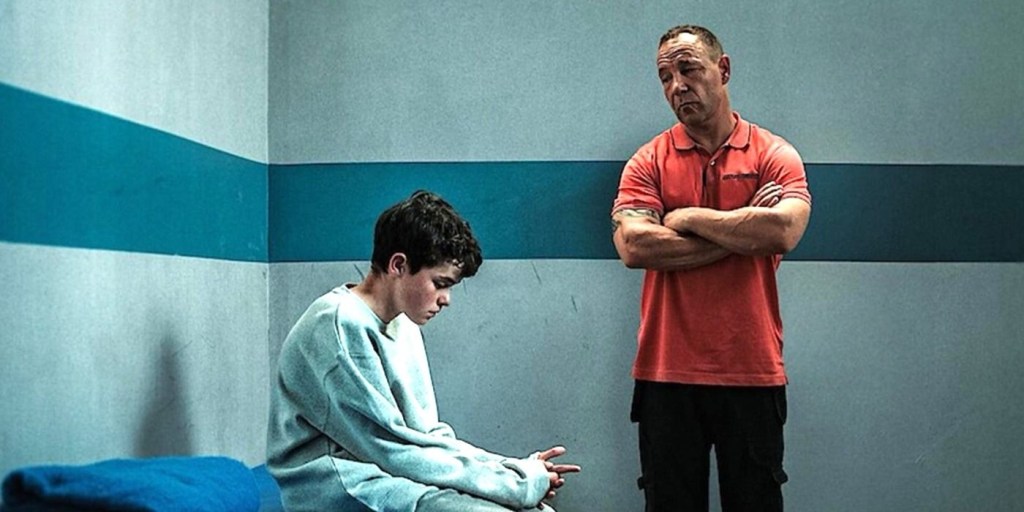
This week, I watched a television drama depicting the harrowing story of a young boy who commits a shocking act of violence. The production was compelling well-acted, emotionally intense, and designed to keep viewers glued to the screen. But while it makes for powerful television, it’s not a Rosetta Stone for understanding male violence. The story it tells a child with no prior behavioural issues committing a sudden and brutal act is an outlier, not a basis for evidence-based prevention or policy.
Our public discourse around male violence, particularly among adolescent boys, is increasingly shaped by moral panic and media narratives. Yes, I take the harms of social media and the broader technology sector very seriously. I support the government’s proposed social media ban for children, and I share concerns about the impact of figures like Andrew Tate and the broader ecosystem of online misogyny.
But our collective obsession with these figureheads often masks a deeper unwillingness to confront the broader social and structural determinants of male violence.
Recent data challenges some of our assumptions. Plan International’s Gender Compass reveals that it is older men not younger ones who are most likely to reject or remain indifferent to gender equality. There is no clear evidence that young men in Australia are more misogynistic than they were a generation ago. And yet, as the Australian Child Maltreatment Study has shown, rates of sexual violence perpetrated by adolescent boys have doubled in that same period.
So what’s happening?
Colleagues and I have argued for greater attention to what we call the commercial determinants of gender-based violence. One major factor: the unregulated, ubiquitous access children have to violent and degrading pornography. While we continue to talk about the attitudes of boys, we rarely interrogate the industries profiting from their exposure to harmful content.
There is a persistent tendency to locate the problem within boys themselves as if they are uniquely broken or inherently violent. But boys are not the architects of the world they inherit. We are. As I said in an interview recently we are the adults in the room. They are children. If we are alarmed by their behaviour, the real question is: what have we failed to build, regulate, or protect?
It is our responsibility to ensure that the world boys grow up in is as safe, healthy, and respectful as possible. That means acting on the evidence, regulating harmful industries, and shifting the focus away from fear-driven scapegoating toward structural accountability. If we want to prevent violence, we must look beyond the boys and squarely at ourselves. As ever peace be with you .
 Make the Connection
Leave a comment